The more time you spend listening to “social media experts” and reading breathless press reports about the future of social media, the more value you’ll begin to assign to “influencers”. A near mythical creature through whom all information of value is transferred from the merchants to the masses. And like most mythical creatures, tales of it’s prowess and miraculous achievements far exceed any of it’s sightings.
The term “Influencer”, like many online neologisms, is poorly defined. The term itself is often used interchangeably with related terms, that convey different concepts, like fan, popular, early adopter and celebrity. The problem is further compounded when network theory is layered on top of these linguistic inaccuracies resulting in a conceptual hodgepodge of little clarifying value. Given the importance companies are placing on identifying “influencers” and the sheer number of companies popping up to make that happen, having a way to evaluate claims of influence, beyond simple popularity, is critical.
 Thankfully, there is a wealth of academic and commercial thought around the nature and mechanics of influence available to interested strategist. Taking that research and applying it to the evolving social media landscape a number of important evaluative questions become readily apparent. The following questions should help you tell the difference between vendors of truly insightful analysis and those selling colorful charts and quantitative snake oil. These questions are intended as simple set of heuristics to aide in the development of analytic programs and the vetting of commercial applications. Answering these questions gets you closer to a identifying the truly influential people within a group and how that influence may be tapped for both commercial and more importantly, group benefit. Vendors who cant answer these questions, or worse haven’t considered them, are unlikely to offer actionable data and should be avoided.
1) What is the nature of the relationship between Influencer and Influenced?
Author Malcolm Gladwell has over 46,000 followers on Twitter. In this group there are fans of his pop-science books, readers of his articles, critics of his writtings, personal friends and celebrity followers. His influence over the various sub-groups that make up his “followers” is neither constant nor always positive. Identifying the nature of the relationship between Mr. Gladwell and the various groups of people who follow him is critical to understanding his influence on them.
Any program that claims to be able to identify an “influencer” should also be able to identify the nature of the relationship they have with the groups over whom they hold sway. Even a rough categorization of the “influencers” audience into groups like, Friends, Fans and Foes, would yield more actionable data then a generic total number of people “influenced”. Without information on the nature of the relationship between an “influencer” and the sub-groups she influences, the only thing that can be assessed is relative popularity.
If a company is using social media to label someone as an “influencer” than it stands to reason that they should be able to discern the nature of the social influence they exert. Unfortunately, most influence peddlers skip this step and simply assume that popularity + activity(FOF) = social influence. Any vendor offering influence analytics without also offering a reasonably in-depth analysis of the relationship between the “influencer” and the influenced is not to be believed.
2) What is the structure of the network and the community that uses it?
Danah Boyd‘s blog post on “the Real social network” is a great thought piece, worth the time of every strategist developing social media products. The main point of the piece is that when analyzing relationships in social networks, the “social” components do not translate across different networks. While this initially seems like a fairly obvious notion, it is often ignored by analytics vendors promoting “influencer” programs.
On LinkedIn, to establish a connection with someone requires their permission. On Twitter, you can connect to anyone with or without their permission and it requires an act on their part to sever that connection. This slight variation in how connections are made on LinkedIn vs Twitter creates very different network structures and fundamentally different community behaviors. The status update about the great Tuna sandwich one had for lunch plays very differently on Twitter than it does on LinkedIn. It would also travel at different velocities through the networks, reaching a different number of nodes by traversing completely separate paths (even if the population had a high degree of overlap). On LinkedIn the nature of the ties connecting people, times associated with those links and power dynamics of those links are either expressly stated or can reasonably inferred. The structure of the network on LinkedIn makes it a better candidate for influence analysis than Twitter, where none of this information is available.
Determining the influence individuals have on each other on a loosely connected network like Twitter, where connections are formed haphazardly, is far more complex than on LinkedIn. Providers of “influencer” metrics should be able to discuss the structure of the network where their analysis was done and how that structure effects the “influencers” they’ve identified. Unfortunately, this is rarely the case. Vendors have a tendency to declare someone an influencer and allow clients to infer that the influence is both universal and transitory. Without any insight into the structure of the network and the community that is built on top of it all a vendor can claim to measure is popularity.
3) In what domain is the influence exerted and how?
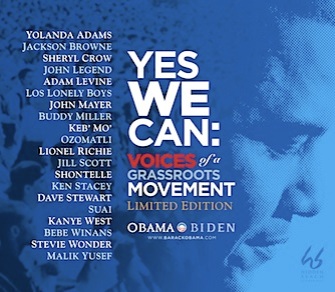
Conservative American political pundit, Steven Colbert, is a very influential figure. However, it is only by identifying specific domains where he is highly influential (liberal book sales, magazine attractiveness, political donations, digital downloads) and those where he is not (audience knowledge, satirical awareness) that his true status as an “influencer” becomes meaningful. Identifying the domain in which someone may be influential is just as important (if not more so) than knowing who has influence.
In what area does the “influencer” shape the thinking of their constituents and how do they do this? Again rough categorizations such as “awareness”, “action”, “sentiment”, “spread”, would be far more insightful than simply claiming someone is influential. If someone is highly influential at increasing their constituents information awareness, is it by simply pointing it out the information (attention) or by highlighting some aspect of it (contextualizing it)? It is not enough to assign “influencers” to obvious subject matter buckets (ie Technology, Mommy Blogger, Foodies) as this doesnt help identify the domain of influence only the subject matter in which that domain occurs.
Without knowledge of the domain in which the influence occurs it is impossible to align influence goals with the proper “influencers”. Does the person simply help spread a brand message in one way or do they deepen the relationship between a brand and its users? Will the influencer drive sales of the product or service or awareness of it? If your influence vendor cannot provide some insight into the domain where their “influencer” exerts control or how do they do it, then the information they provide is unlikely to have any more lasting impact then a traditional banner campaign.
Conclusion
Marketers are used to broadcasting messages at consumers, using everything from celebrity figures to experts. Influence analytics programs are treated as the digital equivalent of this process, locating a “super user” to broadcast messages at all other users. Marketers have fallen in love with the idea of locating a central figure who can broadcast their brand message into a desirable niche without requiring them to engage with that niche. Of course this approach misses the point and much of the opportunity in identifying “influencers”.
Vendors have allowed marketers to confuse the ability to broadcast a message at a niche with having influence over that niche. Sales, engagement, sentiment and distribution are all results of influence that are ignored and not addressed by many “influencer” analysis programs.If an influence peddler does not offer some measure of the nature of the influence (friend, fan, foe), the type of influence (expertise, authority, emotion) exerted and the domain (product, experience, information) where effective, then be wary.


 Posted by Smellow



 Change Is Good